Explore Hinsdale Home Architectural Styles
If you have ever driven through Hinsdale and wondered why one block feels ornate and storybook while the next feels formal, balanced, or distinctly mid-century, you are not imagining it. Hinsdale’s housing stock spans more than 130 years, shaped by its beginnings as a railroad suburb and by waves of building that followed. If you are buying, selling, or simply trying to understand what gives a home its look and feel, this guide will help you spot the most recognizable architectural styles in town and connect them to how a house may live day to day. Let’s dive in.
Hinsdale was platted in 1865, and its development as a railroad suburb helps explain why the village includes a wide mix of domestic architecture from the late 19th and 20th centuries. In other words, Hinsdale is not a one-style town. Its built landscape reflects changing tastes, building eras, and the long life of an established community.
That variety is especially visible in areas documented by the village’s historic surveys. The Robbins Park survey describes a rich mix of styles, with Queen Anne and Colonial Revival tied as the most common examples in that district at 31 each. Tudor Revival also appears in the local record, along with Victorian Gothic Revival, Ranch, Split-Level, and newer Neo-Traditional homes.
If you are evaluating a home here, it helps to think in style families. Some homes feel ornamental and asymmetrical, some feel formal and balanced, some feel cozy and picturesque, and others prioritize efficiency or a modern version of traditional design.
Hinsdale has two National Register historic districts: the Downtown Hinsdale Historic District and the Robbins Park Historic District. In designated historic districts, the village requires a certificate of appropriateness for exterior alterations, demolition, and new construction. The local ordinance also emphasizes compatibility, scale, massing, and relationship to the site and streetscape.
For buyers and sellers, that matters because architecture in Hinsdale is not just about style labels. In some parts of town, exterior changes may be reviewed through a preservation lens. That can shape how a home evolves over time and how new construction fits into an established streetscape.
Queen Anne is one of Hinsdale’s signature historic styles. Local survey work identifies it as tied for the most common style in Robbins Park, and it is one of the clearest late-Victorian references you will see in older parts of the village.
You can often recognize a Queen Anne home by its asymmetry and visual layering. Common cues include intersecting gables, mixed materials, turrets or dormers, spindlework at porches or entries, and multi-pane or stained-glass windows. These homes tend to look detailed and individualized rather than uniform.
The floor plan is part of the appeal. National Park Service guidance notes that Queen Anne houses moved away from boxy symmetry and toward a more open, asymmetrical flow organized around a central family staircase.
In everyday terms, that can mean a home that feels full of character, with circulation that unfolds in a less predictable way. If you are drawn to craftsmanship, ornament, and a house that does not feel standardized, Queen Anne may be the style that grabs you first.
Victorian Gothic Revival also appears in Hinsdale’s historic survey record. This style is vertically oriented and draws inspiration from medieval church architecture, which gives it a more dramatic silhouette than many neighboring homes.
Look for steeply pitched gable roofs, tall narrow windows, pointed arches, and ornamental bargeboard or gingerbread trim. Local examples may also feature irregular footprints and wraparound porches, which adds to the picturesque effect.
Compared with more formal styles, Victorian Gothic Revival homes often feel less symmetrical and more expressive. Their shapes and details create a strong sense of texture from the street.
For many buyers, the appeal is a home that feels distinctive and historic, with a plan and exterior that break from the expected. If you like architectural character and a less formulaic layout, this is a style worth learning to recognize.
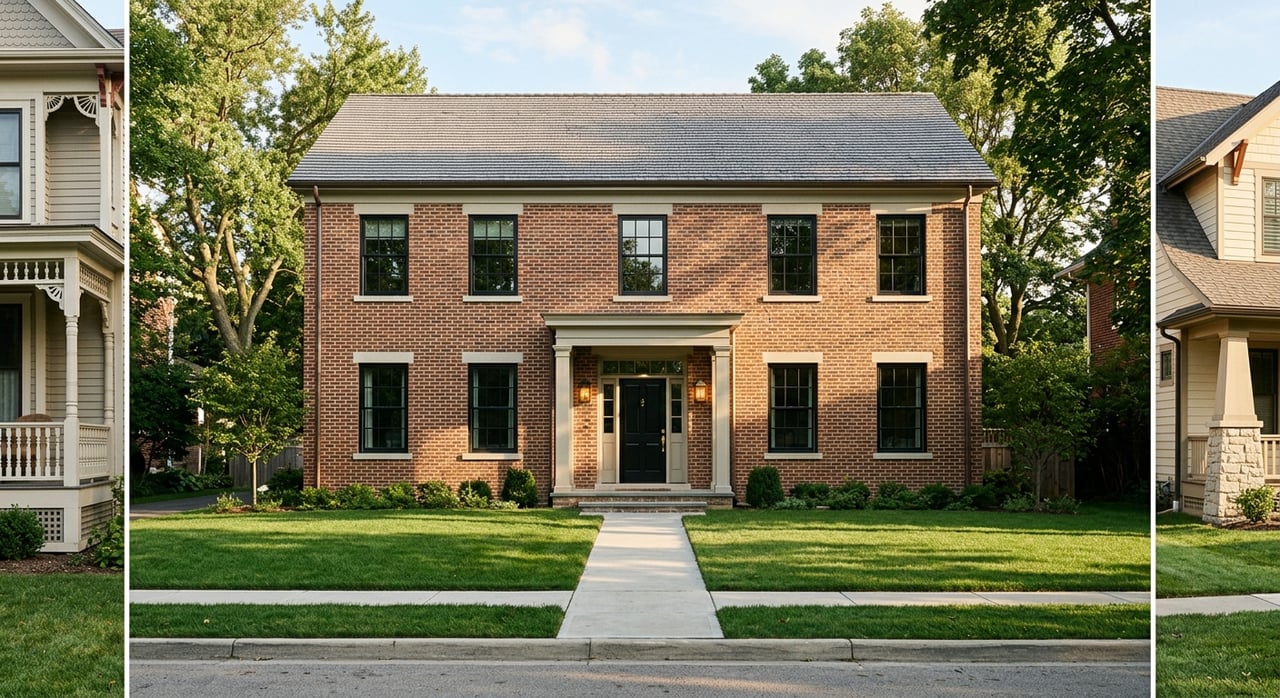
Colonial Revival is one of the defining styles in Hinsdale. It ties Queen Anne for the most examples in Robbins Park, and it remains one of the easiest styles for buyers to understand because its design language is so orderly.
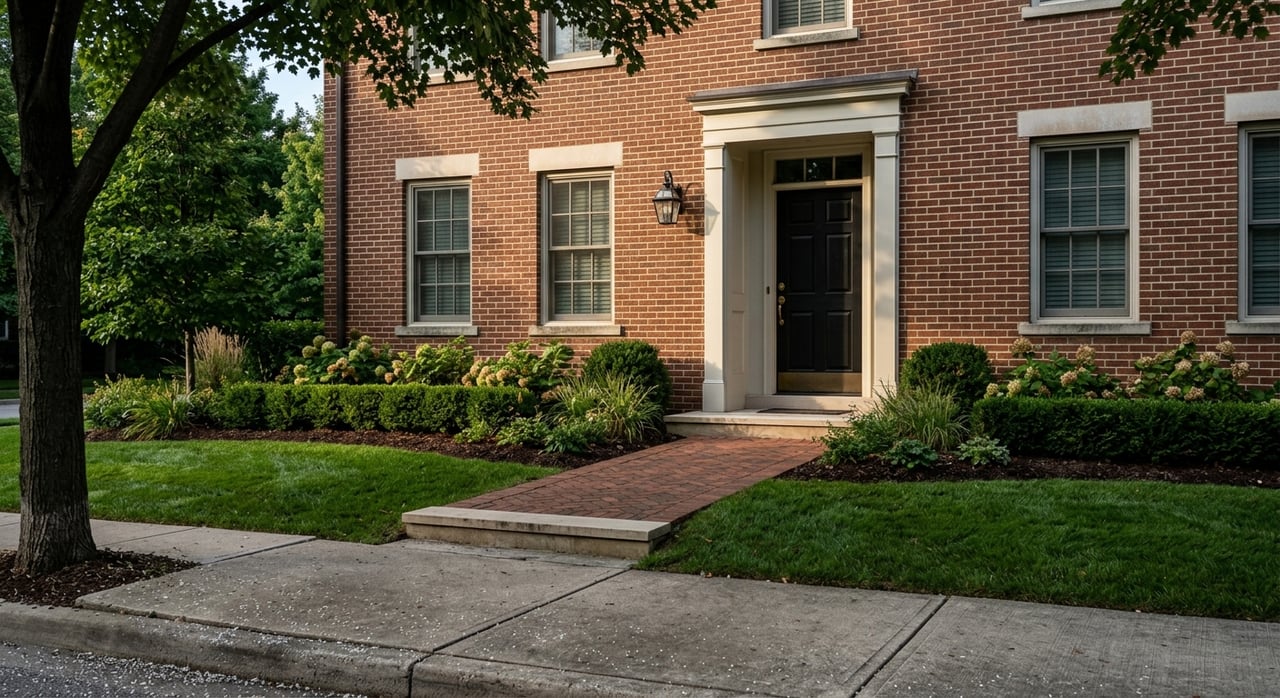
Common features include a symmetrical façade, double-hung windows, columns or pilasters, fanlights or Palladian windows, and a prominent front entry or porch. These homes often feel composed and balanced from the curb.
A related subtype you may also notice is Dutch Colonial Revival. If you see a gambrel roof, that is often the visual clue readers recognize before they know the name of the style.
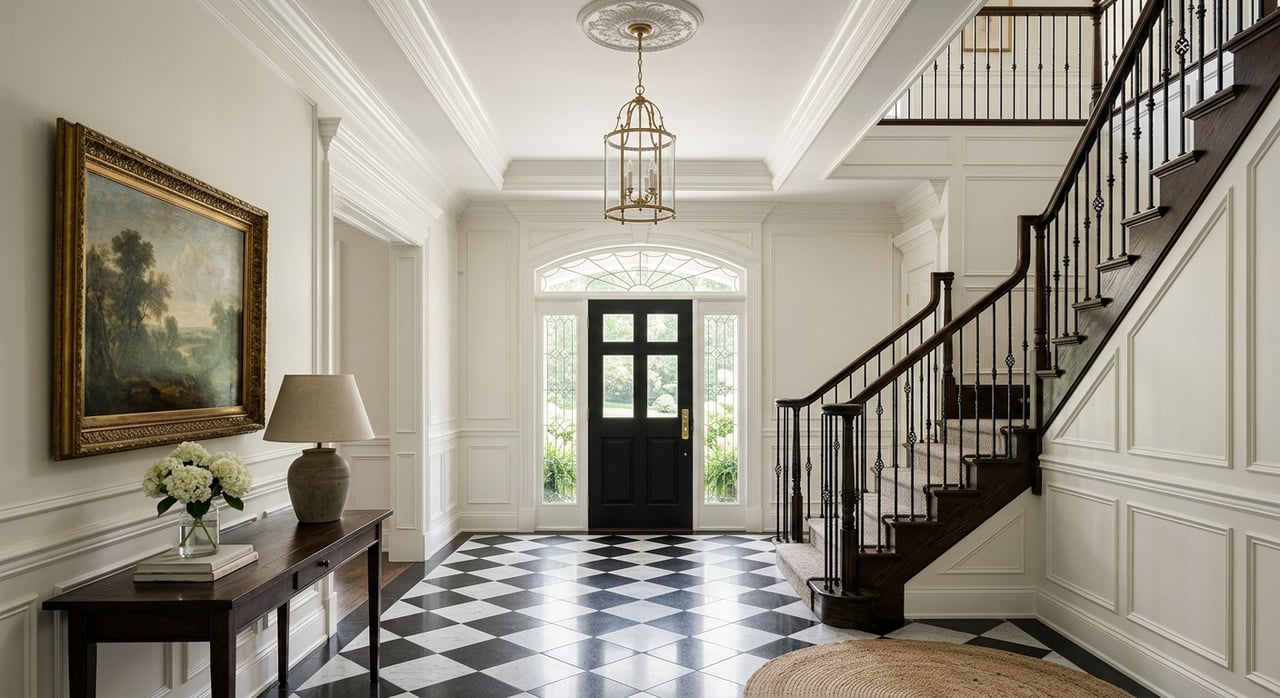
Colonial Revival homes are often associated with a central hall and staircase. Even when interiors become somewhat freer over time, the style is usually rooted in regularity and symmetry.
If you prefer clear room hierarchy, balanced proportions, and a layout that feels more structured, Colonial Revival may be a natural fit. It is often the style that appeals to buyers who want classic curb appeal without the busier detailing of Victorian architecture.
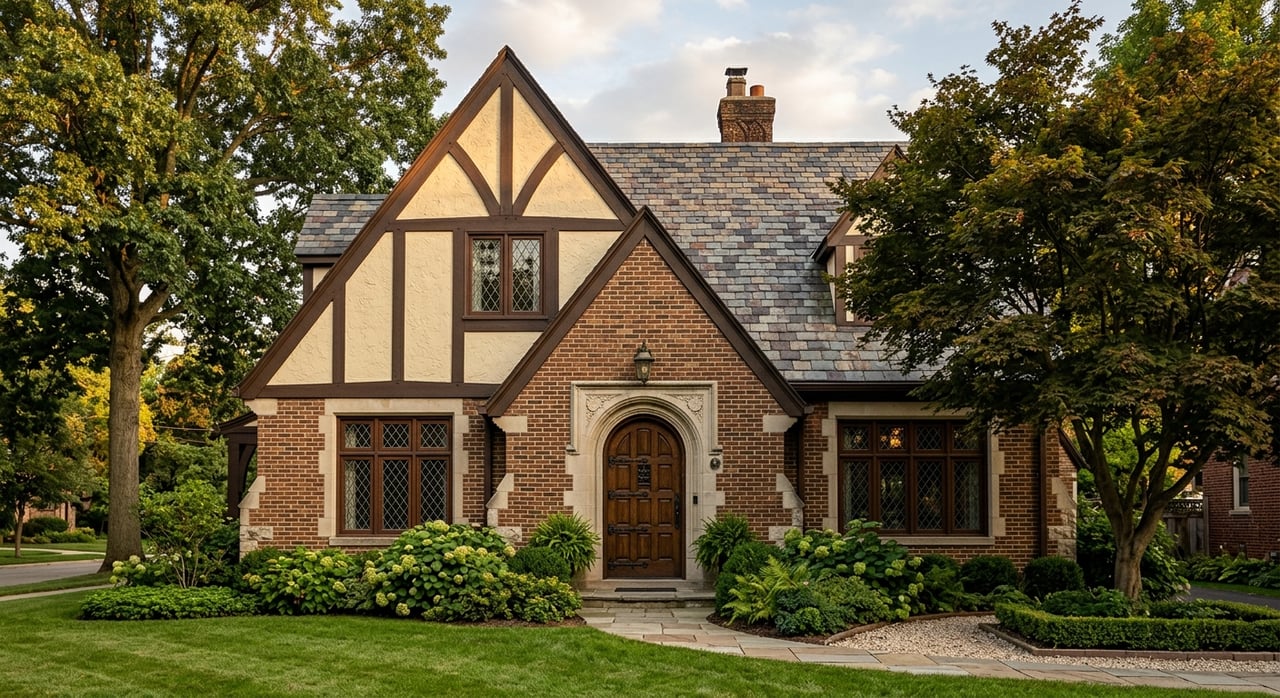
Tudor Revival is less common locally than Queen Anne or Colonial Revival, but it remains an important part of Hinsdale’s architectural mix. The Robbins Park survey identifies nine Tudor Revival houses and one school, and the style was especially popular in the 1920s and 1930s.
You can usually spot Tudor Revival by its steeply pitched gable roofs, brick or stucco walls, decorative half-timbering, tall narrow casement windows, prominent chimneys, and irregular footprint. These elements create the storybook look many buyers associate with the style.
Tudor Revival houses tend to be less formal than Colonial Revival and less visually layered than Queen Anne. Their irregular shapes, steep rooflines, and narrower windows often create a cozy, enclosed feel.
If you are looking for a home with picturesque curb appeal and a strong sense of atmosphere, Tudor Revival often stands out. It is a style that feels warm, intimate, and highly recognizable.
Not every Hinsdale home is historic in the Victorian or revival sense. The village’s surveys also identify Ranch and Split-Level homes as part of Hinsdale’s 20th-century housing story.
A local example of a 1951 Ranch is described with a low form, a steep hipped roof crossed by a front-facing gable, picture windows, and wood-panel detailing typical of the 1950s. In general, Ranch homes read as horizontal, straightforward, and more casual than earlier styles.
National Park Service guidance describes 1950s ranch interiors as typically open and informal, often with an eat-in kitchen, a large living room integrated with dining space, generous glass, and practical bedroom-bath arrangements. The style is closely tied to flexibility and efficient everyday living.
For buyers, that often translates into easier circulation and a less formal daily routine. If you want a house that feels practical and approachable, Ranch homes can be very appealing.
Split-Level houses build on the postwar idea in a different way. They use staggered half-levels or a three-level form rather than a single long horizontal plan.
From the street, that can mean a home with varied roof heights and an entry positioned between levels. Inside, the layout often separates living areas in a way that feels more dynamic than a standard ranch.
Split-Levels tend to appeal to buyers who like a practical division of space without a fully traditional two-story layout. They are part of the broader mid-century push toward efficiency and informal living.
If you want a home that balances separation and flow, this style may be worth a closer look. It often fits buyers who value function first.
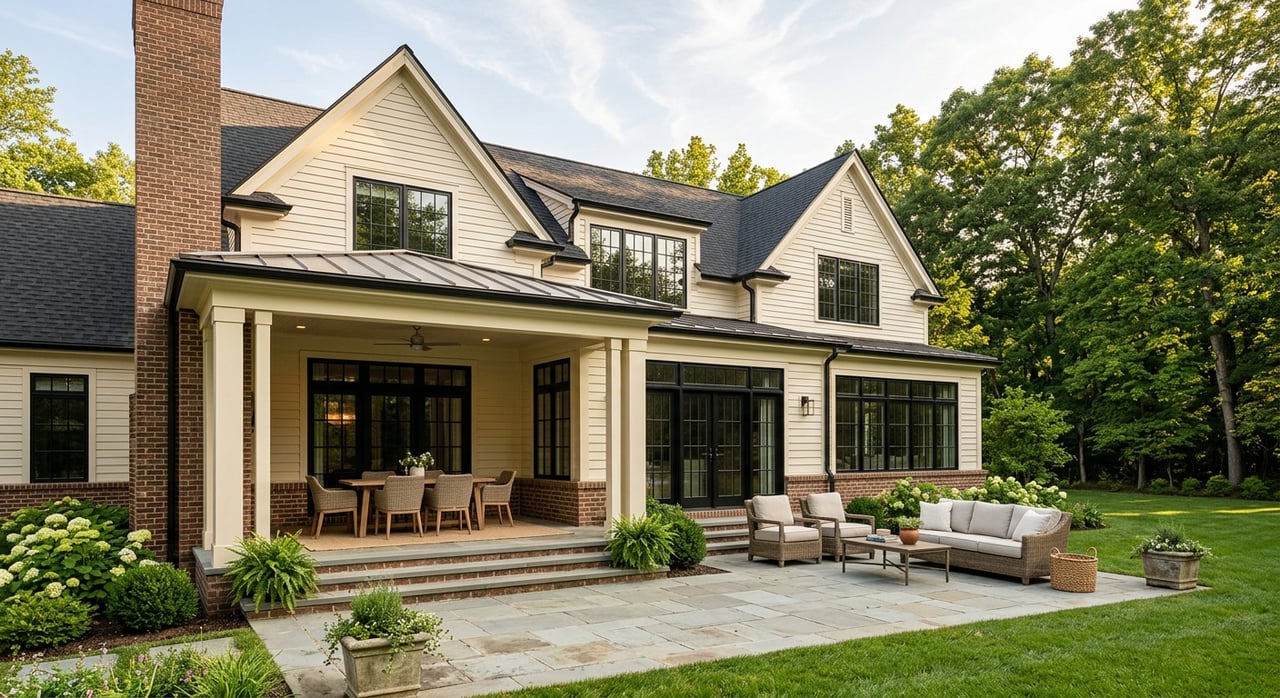
One of the most interesting parts of Hinsdale’s architectural landscape is that many newer homes are not purely contemporary in appearance. Local survey material identifies many newer houses as Neo-Traditional, including Neo-Colonial, Neo-Tudor, and Neo-Queen Anne forms.
That means a newer custom home in Hinsdale may borrow historic cues while offering a more modern build, larger scale, and updated materials. The result is often a house that feels familiar from the street while delivering the amenities many buyers want today.
In historic districts, new construction and major exterior changes are not just about personal taste. The village’s preservation framework considers compatibility, scale, massing, and streetscape relationship.
That is important if you are buying a newer home in an older area or planning future changes. In Hinsdale, the conversation around design is often about how a house fits its setting as much as what style name it carries.
Architecture is visual, but it is also practical. A home’s style can shape how it feels to move through, furnish, maintain, and enjoy over time.
Here is a simple way to think about the main Hinsdale styles:
If you are buying in Hinsdale, style should never be the only factor. Condition, layout, lot, location, and future plans all matter. Still, understanding the style language can make it much easier to narrow what feels right for you.
When you know what you are seeing, you can make smarter decisions faster. You can tell whether a home’s charm comes from ornament, symmetry, roofline, scale, or a modern interpretation of older design.
That clarity is especially useful in Hinsdale, where architectural variety is part of the market’s appeal. Whether you are drawn to a historic house with decorative detail or a newer custom home that nods to tradition, understanding style helps you evaluate fit with more confidence.
If you want help comparing architectural styles, understanding how a home fits its block, or narrowing your search in Hinsdale and the western suburbs, Anne Hodge offers the kind of calm, consultative guidance that makes a complex decision feel much more manageable.
Stay up to date on the latest real estate trends.
Anne thoroughly enjoys her profession and has a deep sense of responsibility to her clients. She understands the magnitude of selling or buying a home, and works tirelessly to make sure her client's goals are met.