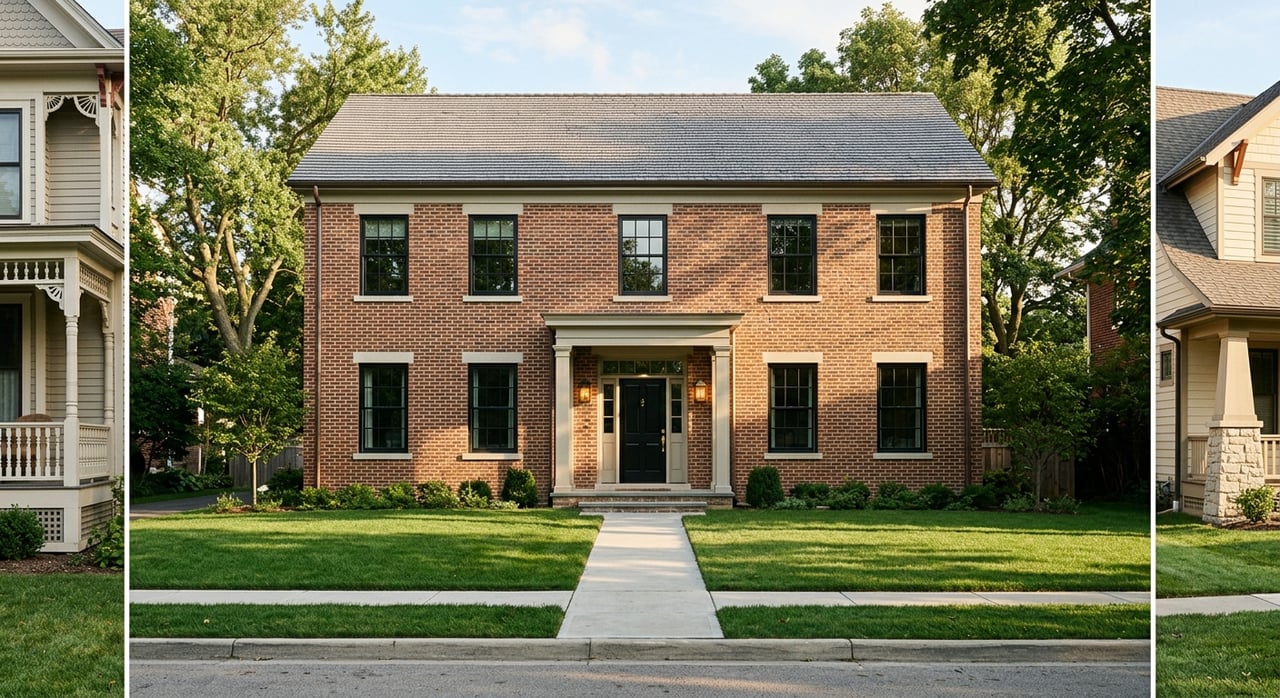
Western Springs Architectural Home Styles Guide
Western Springs, IL spans over 150 years of home building, from pre-1900 Victorians in Old Town to 1920s Tudor Revivals in Forest Hills and postwar Ranch homes near Timber Trails. The village is 95.6 percent owner-occupied with a median home value of $739,400, according to U.S. Census Bureau QuickFacts.
Neighborhood | Development Era | Dominant Home Styles | Best For |
|---|---|---|---|
Old Town | 1870s to early 1900s | Victorian, Queen Anne, Georgian | Buyers wanting the oldest historic character |
Fairview Estates | Early 1900s | Prewar revival styles | Buyers wanting an established, walkable location near Old Town |
Field Park & Ridge Acres | Early to mid-1900s | Mixed prewar housing stock | Buyers comparing early expansion neighborhoods |
Forest Hills | 1920s to 1950s | Tudor Revival, Georgian, Colonial Revival, Dutch Colonial Revival, French Eclectic, Cape Cod, Ranch, Split-Level | Buyers wanting the widest style variety in one neighborhood |
Commonwealth & Timber Trails | 1990s to present | Townhomes and newer single-family infill | Buyers wanting newer construction or a townhome layout |
Drawn to original detail, or a newer, lower-maintenance layout? Western Springs offers both within blocks of each other.
See what daily life looks like in Western Springs' historic neighborhoods or browse current Western Springs homes for sale, including newer construction and townhomes.
Wondering why one block in Western Springs feels full of ornate older homes while another leans traditional, midcentury, or newly built? That mix is part of what makes the village so interesting, especially if you are trying to buy, sell, or simply understand what drives home style and value here. This guide will help you recognize the architectural home styles you are most likely to see in Western Springs, where they tend to appear, and what those differences can mean for your decision-making. Let's dive in.
Western Springs developed in waves from the 1870s through today, rather than all at once. Local records show architectural age varies throughout the community, and neighborhood history shows clear layers of growth from the earliest residential core to later townhome and custom-home development.
That timeline helps explain the variety you see today. Older areas often include pre-1900 and early 20th-century homes, while later sections introduced prewar revival styles, postwar Ranch and Split-Level homes, and more recent infill or replacement construction.
The village is also largely owner-occupied. Census QuickFacts show a 95.6% owner-occupied housing rate and a median owner-occupied home value of $739,400, which helps support a strong culture of reinvestment, updates, additions, and preservation-minded improvements.
Owner-occupancy rate and median home value are reported by the U.S. Census Bureau's QuickFacts data for Western Springs village, Illinois.
If you are looking for the oldest homes in Western Springs, start with Old Town. It was originally marketed in 1870, and the Western Springs Historical Society's house walks have repeatedly highlighted pre-1900 homes there, including Georgian and Victorian examples.
Fairview Estates is the village's second-oldest neighborhood. After that, Field Park and Ridge Acres represent the next major expansion, which adds another layer to the village's architectural timeline.
Forest Hills tells a slightly different story. Developed in the 1920s, it reflects a later but still highly character-rich period, with a concentration of prewar revival styles and then a shift to postwar forms after World War II.
Victorian-era homes are among the most visually distinctive properties in Western Springs. In the village's older areas, especially Old Town, you may see houses with asymmetrical facades, wraparound porches, spindlework, decorative shingles, and a mix of exterior materials.
Queen Anne is one of the best-known Victorian expressions. These homes often stand out for their detail and personality, which can be a major draw if you love architecture with a strong sense of history.
From a practical standpoint, these are also some of the homes where condition and upkeep matter most. Their decorative features can add charm, but they may also require more ongoing maintenance than simpler house forms.
If your taste runs more formal and symmetrical, Georgian and Colonial Revival homes are especially important styles to know in Western Springs. The Historical Society's 1983 House Walk focused on Georgian and Victorian homes, which gives you a good sense of how central these styles are to the village's historic identity.
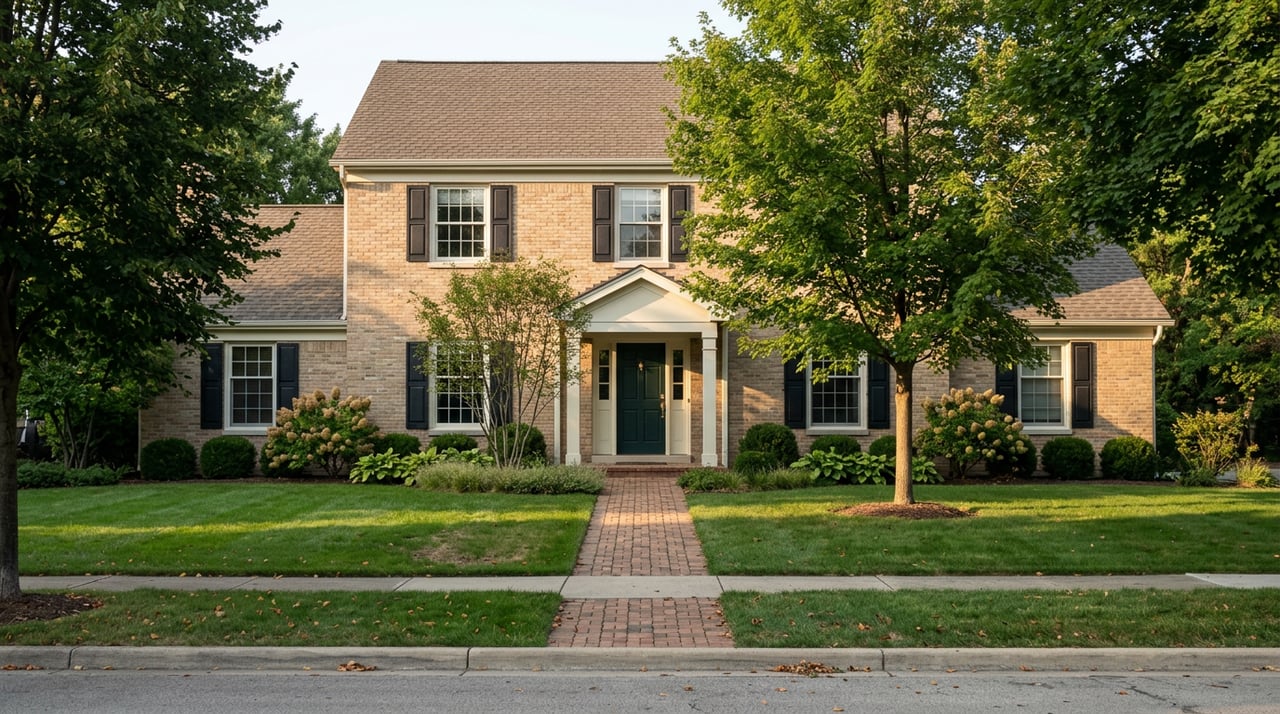
Colonial Revival homes borrow from earlier Georgian and Federal traditions. You may notice balanced facades, pronounced front entries, gabled or pedimented windows, pilasters or columns, sidelights, fanlights, and sometimes Palladian windows.
These homes often appeal to buyers who want classic curb appeal and a traditional layout. In Western Springs, they are particularly relevant in older neighborhoods and in Forest Hills, where Georgian and Colonial Revival homes are part of the prewar housing stock.
Western Springs also includes homes that reflect the practical, design-forward ideas of the early 20th century. American Foursquare homes are usually compact, two-story houses with a hipped roof, hipped dormers, a full-width porch, and an efficient room layout.
These homes were valued for making smart use of space. That still resonates with buyers today, especially if you want a house with historic character but a more straightforward footprint than some Victorian-era homes.
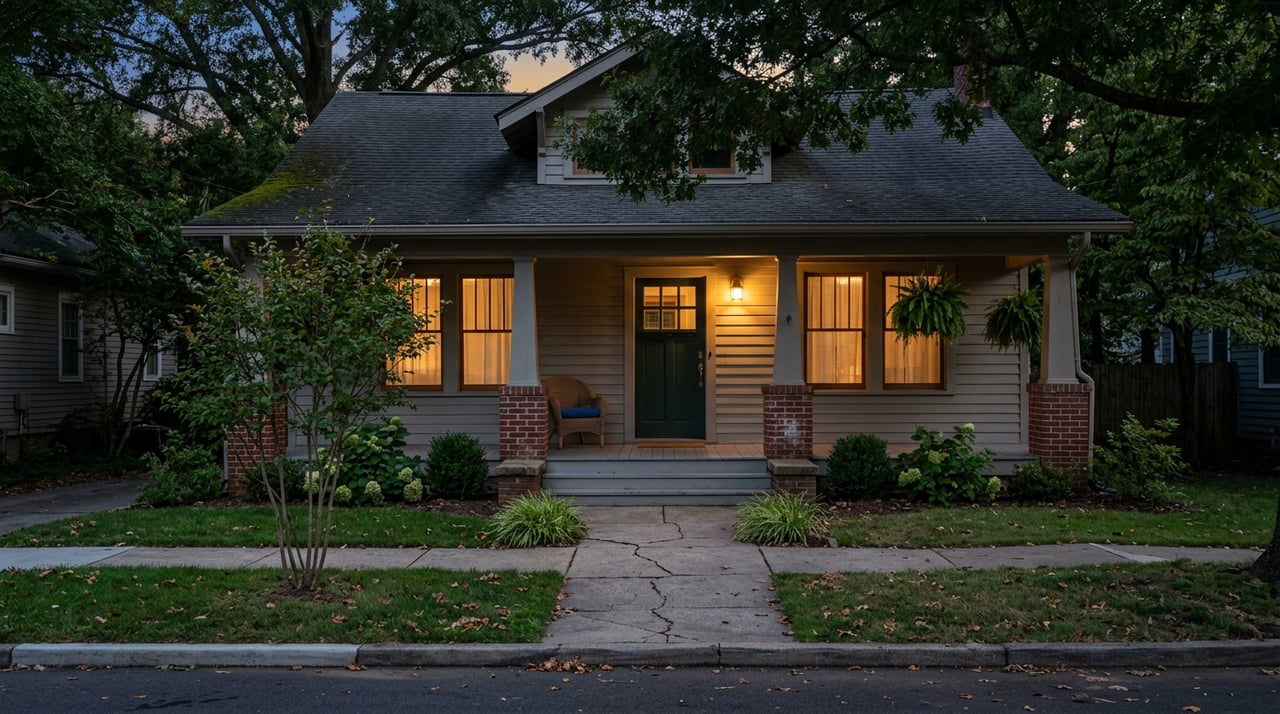
You may also hear people mention Craftsman-era and Prairie-influenced details in older parts of the village. A local historical note about a Forest Hills home inspired by Frank Lloyd Wright creates a useful local connection to Prairie influence, even though Western Springs is not defined by a single Prairie-style district.
Forest Hills is one of the clearest places to see how Western Springs architecture evolved in the early 20th century. According to neighborhood history, its prewar homes were mostly Tudor Revival, Georgian, Colonial Revival, Dutch Colonial Revival, French Eclectic, and Cape Cod.
Tudor Revival homes are usually easy to spot once you know the signs. Look for steeply pitched roofs, front or cross gables, half-timbering, and prominent chimneys.
Dutch Colonial Revival homes often bring a softer traditional look, while French Eclectic and Cape Cod homes add more variety to the streetscape. Together, these styles give Forest Hills a layered, established feel that many buyers find appealing.
After World War II, Western Springs housing shifted again. In Forest Hills, postwar development brought more Ranch and Split-Level homes, which differ from the earlier revival styles in both layout and appearance.
Ranch homes are usually associated with one-level living and a more horizontal profile. Split-Level homes are better understood as a house form with staggered floor levels, rather than a single decorative style.
For buyers, these homes can offer a different kind of opportunity. They may have simpler exteriors and more modest original layouts, but they often sit on lots that have supported updates, additions, or full replacement over time.
If you are weighing a move-in-ready Ranch against an older home with more character, our guide on buying in Western Springs when inventory is tight walks through how to compete for either type of home. Buyers focused on Tudor Revival or Georgian estates may also want to see our guide to buying a luxury home in Western Springs.
In newer Western Springs housing, the story is less about one signature architectural style and more about reinvestment and replacement. The village has seen fill-in construction, rehabs, additions, and demolitions since the early 1990s, according to the Village of Western Springs.
Forest Hills neighborhood history adds more context. It notes that larger lots once occupied by Ranch and bi-level homes have been targeted for teardowns since the 1990s, making room for larger two- and three-story homes.
Commonwealth and Timber Trails are the clearest examples of later development in the village. Commonwealth became a townhome development, while Timber Trails is the newest neighborhood and includes a mix of single-family homes and townhomes.
If you are buying in Western Springs, architecture is not just about looks. It often affects layout, upkeep, storage, ceiling height, room flow, and the likelihood that a home has been updated over time.
Older homes may offer original millwork, distinctive facades, and a stronger sense of period character. Newer homes and replacement builds often emphasize larger kitchens, more open layouts, attached garages, and modern systems.
That does not make one option better than another. It simply means your best fit depends on how you weigh character, convenience, maintenance, and future plans.
A helpful way to narrow your search is to think in terms of development era. If you know you love ornate historic detail, older sections may rise to the top. If you want newer construction or a townhome option, later developments and infill-heavy areas may make more sense. You can start by browsing current Western Springs homes for sale filtered to the era and style you prefer.
If you are selling, your home's architectural style can shape how buyers perceive value and potential. A well-preserved Victorian, Georgian, or Tudor Revival home may attract buyers who are specifically looking for original character and established neighborhood appeal.
At the same time, buyers tend to compare homes within the context of their era and condition. A postwar Ranch, Split-Level, or infill property may appeal for very different reasons, such as lot size, layout flexibility, or updated systems.
Western Springs also has a clear appreciation for homes that fit their surroundings. The Western Springs Historical Society's preservation awards recognize exterior rehabilitation, compatible additions, and newer buildings that fit the scale and historic style of the village.
That context matters when preparing a listing. Thoughtful updates, a strong presentation strategy, and clear positioning around style, condition, and location can help buyers understand what makes a home stand out. Sellers weighing whether to buy and sell at the same time may also want to read our guide on buying and selling at once in Western Springs.
One of the easiest ways to understand Western Springs is to stop asking whether a home is simply old or new. A better question is: what era of the village does this house belong to?
Old Town and Fairview Estates connect you to the earliest residential history. Field Park and Ridge Acres represent the next layer, Forest Hills captures a strong prewar and postwar transition, and Commonwealth and Timber Trails reflect later phases of development.
Once you view the village through that lens, the housing stock becomes much easier to read. You can compare homes more clearly, understand why one street feels different from the next, and make more informed choices as a buyer or seller. If you are also weighing Western Springs against a neighboring suburb, see our comparison guide, La Grange vs. Western Springs: How to Choose Your Suburb.
If you want help understanding which home styles, blocks, or neighborhoods best match your goals in Western Springs, Anne Hodge can help you evaluate the tradeoffs with clear, local guidance.
Old Town has the earliest residential core, and Fairview Estates is the second-oldest neighborhood. Field Park and Ridge Acres came next, followed by later development phases in areas like Forest Hills.
Forest Hills is known for prewar Tudor Revival, Georgian, Colonial Revival, Dutch Colonial Revival, French Eclectic, and Cape Cod homes, with Ranch and Split-Level homes becoming more common after World War II.
Victorian homes are most closely associated with the village's oldest areas, especially Old Town, where historical house walks have highlighted pre-1900 homes and Victorian examples.
Yes. Newer homes appear through infill construction, rehabs, additions, and replacement homes in older neighborhoods, as well as in later developments like Commonwealth and Timber Trails.
The village developed in stages from the 1870s through today, so each growth period added different home styles and housing forms to the overall streetscape.
Yes. Census QuickFacts report that 95.6 percent of housing units in Western Springs are owner-occupied.
About the Author: Anne Hodge is a licensed real estate broker with Compass (Illinois License #475160074), based in the western Chicago suburbs and specializing in La Grange, La Grange Park, Western Springs, Clarendon Hills, and Hinsdale. She is a member of the Compass Legends Society and has been recognized among Chicago Magazine's Top 100 Agents. Learn more on the Anne Hodge team page.
Population, owner-occupancy, and median home value figures are from U.S. Census Bureau QuickFacts for Western Springs village, Illinois. Neighborhood development history and House Walk references are drawn from the Western Springs Historical Society's published records. Post-1990s infill and teardown activity is referenced from the Village of Western Springs.
Stay up to date on the latest real estate trends.
Anne thoroughly enjoys her profession and has a deep sense of responsibility to her clients. She understands the magnitude of selling or buying a home, and works tirelessly to make sure her client's goals are met.